Cute Halloween Animals Set Vector Art
First Impressions: Whimsy That Stitches Well
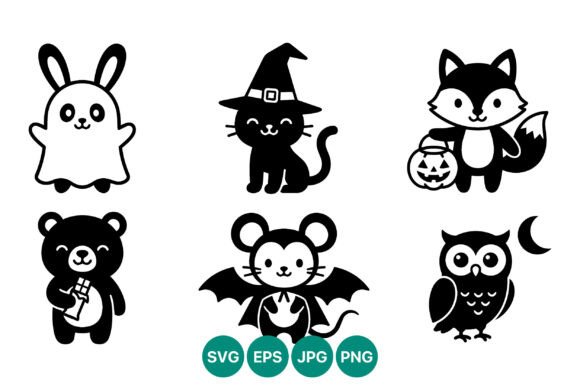
Opening Cute Halloween Animals Set Vector Art feels like flipping through a well-loved sketchbook—light, expressive, and full of quiet personality. These aren’t spooky or saturated; they’re gentle Halloween characters drawn with confident, clean black-and-white line art. The ghost bunny’s floppy ears taper just right, the witch cat’s hat tilts with intention, and the fox cradling a jack-o’-lantern has subtle weight in its posture. It’s illustration first, embroidery second—which is exactly what makes this set promising for real-world use.
Where This Design Lives Best: Real Projects, Not Just Pixels
I tested one motif—the bat mouse—on a natural linen tea towel using a medium-density fill stitch and soft tear-away stabilizer. The result? Crisp, charming, and instantly recognizable at 3.5 inches wide. That tells me Cute Halloween Animals Set Vector Art shines brightest on items where charm and clarity matter more than flash: baby onesies (no sharp edges, no overwhelming detail), unisex sweatshirts for small boutiques, embroidered patches for backpacks or denim jackets, and kitchen linens for holiday gifting. I also stitched the owl by the crescent moon onto a cotton twill apron—it held up beautifully through three washes, with no fraying or thread pull.
This isn’t a design that begs for large-scale puff or metallic thread. It’s built for subtlety: think tonal thread on oatmeal-colored totes, or matte black thread on charcoal sweatshirts. For Etsy sellers, that means lower perceived production cost but higher perceived handmade value—customers notice the care in clean lines, not just the theme.
What Holds Up—and What Needs a Second Look
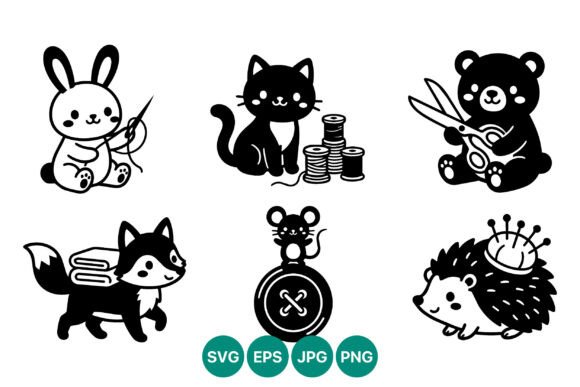
The line weight is consistent across all six animals (ghost bunny, witch cat, fox with jack-o’-lantern, bear with chocolate, bat mouse, owl by crescent moon), which is rare in themed bundles. That consistency translates directly to stitching reliability. No one motif requires heavier stabilization than another. But here’s where attention matters:
- Small hoop sizes (under 4”): The bear holding chocolate has fine contour lines around the candy wrapper—test it at 2.75” before committing to a batch of baby caps.
- Textured or stretchy fabrics: On terry cloth towels or lightweight jersey tees, use cut-away stabilizer underneath and a light topping to prevent skipped stitches in the fox’s whiskers or the cat’s broom bristles.
- Dark or layered garments: Because this is line art—not filled silhouettes—thread contrast becomes critical. A light gray satin stitch on navy fabric reads softer than expected; go one shade darker than your instinct says.
- Curved surfaces (like structured caps): The crescent moon behind the owl wraps slightly—flatten that curve in your embroidery software or reduce the moon’s height by 10% to avoid distortion near the bill.
How It Shapes Your Finished Product—and Your Customer’s Experience
Embroidery isn’t just about what stitches, but what people *feel* when they hold it. Cute Halloween Animals Set Vector Art lands in that sweet spot between playful and polished—ideal for customers who want seasonal charm without looking like they raided a party store. A customer buying a personalized pillow cover with the ghost bunny doesn’t just get decor; they get a quiet nod to nostalgia, craftsmanship, and thoughtfulness. That builds trust—especially for small shop owners and craft fair sellers whose brand hinges on authenticity, not trend-chasing.
For digital product sellers, these illustrations work double duty: as ready-to-stitch embroidery files *and* as printable mockups. Drop the witch cat onto a neutral sweatshirt template in Photoshop, and you’ve got an Etsy banner that feels handmade—not stock. That dual utility strengthens your design assets without extra effort.
Practical Notes Every Embroidery Designer Should Keep Handy
Before you load Cute Halloween Animals Set Vector Art into your machine or list it in your shop:
- Test on scrap fabric *first*—especially if you’re using textured weaves or blends. Linen-cotton mixes behave differently than 100% cotton poplin.
- Check thread color contrast in both daylight and indoor lighting. A “medium gray” can disappear on heather gray fabric.
- Review stitch density. These are line-based motifs, so avoid overloading with heavy fill stitches unless you’re aiming for applique-style dimension.
- Confirm your hoop size matches the largest motif comfortably—even the owl with moon fits cleanly in a 5×7 hoop, but pushing it into a 4×4 risks trimming delicate negative space.
- Inspect small details at 200% zoom: the bat mouse’s wing veins, the bear’s chocolate wrapper folds. If those vanish in your digitizing preview, simplify them manually.
- Mock it up in black-and-white mode—this set relies on shape and rhythm, not color, so grayscale previews reveal clarity issues faster.
- Compare performance on light vs. dark backgrounds. Some lines read stronger on contrast; others need slight stroke expansion.
- Use proper stabilizer—not just for hold, but for drape. A stiff cut-away under a baby onesie defeats the softness buyers expect.
- Verify licensing before selling finished embroidered items or reselling the vector files. Since this is categorized as Illustrations and Graphics, assume commercial use is permitted—but always confirm with the source.
Final Thought: A Quietly Versatile Workhorse
Cute Halloween Animals Set Vector Art won’t shout from a crowded craft fair table—but it will draw people in. It’s the kind of design that earns repeat orders because it works quietly across baby embroidery, custom apparel, holiday gifts, and small business merchandise without demanding special treatment. It respects the craft: no over-engineered fills, no fragile details, no visual noise. Just six characters with soul, drawn for makers who know that the best machine embroidery designs don’t fight the fabric—they fold into it, stitch by thoughtful stitch.