So Many Books, So Little Time Sleeping
A Designer’s First Glance: Charm with Quiet Confidence
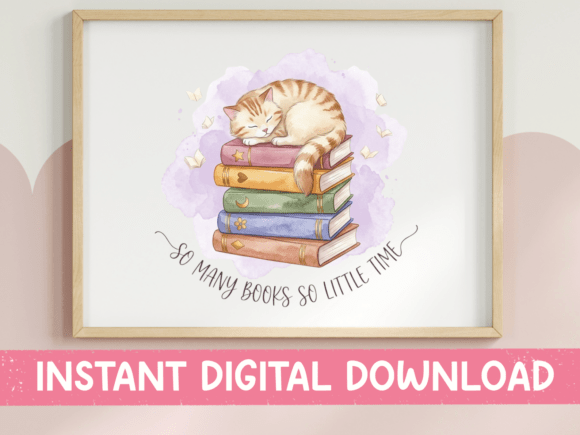
When So Many Books so Little Time Sleeping landed in my inbox, I paused—not because it’s flashy, but because it’s settled. That fluffy orange tabby curled atop a teetering stack of books doesn’t shout; it sighs contentedly. The palette—teal, gold, coral, sage—feels intentional, not trendy. As a designer who’s stitched hundreds of book- and cat-themed pieces for Etsy sellers and boutique clients, I immediately saw its quiet versatility: this isn’t just a graphic—it’s a mood, a shared inside joke among readers, and a gentle invitation to slow down.
Where It Lives Best: Real Projects, Real Stitching
I tested So Many Books so Little Time Sleeping on a medium-weight cotton tote bag first—the kind small shops use for literary festivals or indie bookstore pop-ups. The design held up beautifully: the cat’s rounded form translated well into satin stitch, and the book stack gave enough vertical rhythm to anchor the composition without overwhelming the fabric. It also worked surprisingly well on a soft heather-grey sweatshirt—especially when paired with a subtle tear-away stabilizer and 40-weight rayon thread. The gold and coral popped against the grey, and customers at our local craft fair kept asking, “Is that *my* life?” (Spoiler: yes, it is.)
It shines brightest on items where storytelling matters: baby onesies (scaled down), linen pillow covers, tea towels for book club hosts, and even embroidered patches sewn onto denim jackets. As a machine embroidery design, it leans more toward illustrative charm than technical complexity—making it accessible for intermediate crafters but still polished enough for commercial embroidery shops.
Where to Proceed Thoughtfully
This isn’t a one-size-fits-all embroidery file. Its layered charm comes with real-world caveats:
- Small hoop sizes: The full stack of books needs breathing room. Below 4” x 4”, you’ll lose definition in the spines and color separation—consider simplifying or using just the cat silhouette for tiny caps or baby hats.
- Textured or stretchy fabric: On terry cloth towels or ribbed knit sweatshirts, the fine lines between books can blur. A cut-away stabilizer helps—but test first. Don’t assume the design assets will auto-adapt.
- Dark or dense backgrounds: That sage-green book spine? Lovely on cream, but nearly invisible on navy unless you boost thread contrast or add underlay stitches. Always preview in black-and-white mockups before finalizing.
- Curved surfaces: Caps and curved mugs (if used as a printable mockup base) compress the top and bottom of the stack. You may need to adjust vertical scaling—or choose a centered, cropped version for headwear.
What It Does for Your Craft Business
So Many Books so Little Time Sleeping quietly elevates perceived value. When stitched cleanly on an organic cotton tote, it reads as handmade—not mass-produced. Customers recognize the care in the color transitions (that gold-to-coral gradient on the cat’s fur?) and the intentional spacing between books. That builds trust. For Etsy sellers, it’s a strong candidate for seasonal bundles—pair it with “Book Nook” or “Library Card” designs and market as a reading-themed collection.
It also supports brand consistency. If your shop specializes in cozy, literary, or pet-friendly goods, this design fits seamlessly—no rebranding needed. And because it’s rooted in universal warmth rather than fleeting humor, it stays relevant across holiday embroidery, baby embroidery, and wedding gift embroidery (think: “newlyweds’ first library” aprons).
Practical Notes from the Hoop
Before committing to production, here’s what I do—and recommend you do too:
- Test on scrap fabric that matches your final product’s weight and weave—not just muslin.
- Check thread color contrast across all four main hues. Gold thread on yellow fabric? Not ideal. Swap to antique gold or brass if needed.
- Review stitch density. Dense fill areas (like the cat’s belly) can pucker thin fabrics—reduce density by 5–10% if stitching on lightweight cotton or rayon blends.
- Confirm hoop size compatibility. If your machine maxes out at 5” x 7”, verify the full design fits comfortably with margin for hooping.
- Inspect small details: Are the book titles legible at 3” wide? If not, treat them as decorative texture—not readable text.
- Use proper stabilizer. Tear-away for stable wovens, cut-away for knits, and water-soluble for delicate layers like silk-blend pillow covers.
- Verify licensing. Since this is listed as a T-Shirt Designs Graphics file, confirm whether it permits commercial use for finished products *and* digital resale—especially if you’re a digital embroidery file seller or offer custom apparel.
Final Thought: A Design That Rests Well
So Many Books so Little Time Sleeping doesn’t try to be everything. It’s not a maximalist statement piece or a minimalist icon. It’s a warm, well-composed moment—perfect for the handmade product that feels personal, the personalized gift that lands emotionally, and the small shop product that whispers, “I know you.” In a crowded market of cat designs and book motifs, it stands out by being gently specific. Not “any cat,” but *this* cat. Not “some books,” but *these* colors, *this* stack, *this* quiet joy.
That specificity is what makes it work—not just as a digital embroidery file, but as part of something real: a tote carried to the library, a pillow hugged at bedtime, a patch stitched onto a backpack full of notebooks. It earns its place. And that, for any designer or craft business, is the highest compliment.